

A foundation problem doesn’t automatically stop a home sale. It does change how you price the property, explain the condition, and choose the buyer.
If you need to sell house foundation problems can make the process harder, especially when the issue is active or poorly documented. You may need to choose between repairs, an as-is listing, a negotiated credit, or a cash buyer.
Start with facts. Get the condition evaluated, gather every available record, disclose known problems in writing, and compare offers by net proceeds rather than the headline price.
How to Sell House Foundation Problems: Start With Facts
Foundation problems vary widely. A small, stable crack is not the same as a bowing wall or major settlement. You need to know what you are dealing with before deciding how to sell.
What counts as a foundation problem?
Possible foundation issues include settlement, shifting, bowing walls, drainage-related movement, cracked footings, and water intrusion. Some cracks are cosmetic. Others point to movement that needs professional review.
Warning signs can include:
- Doors or windows that stick without another clear cause.
- Sloping or uneven floors.
- Stair-step cracks in brick or masonry.
- Horizontal cracks in basement or foundation walls.
- Gaps between walls, ceilings, floors, or trim.
- Cracks that continue to widen.
- Damp crawl spaces or repeated basement water.
- A garage slab or porch that has separated from the house.
A warning sign is not a diagnosis. It is a reason to investigate.
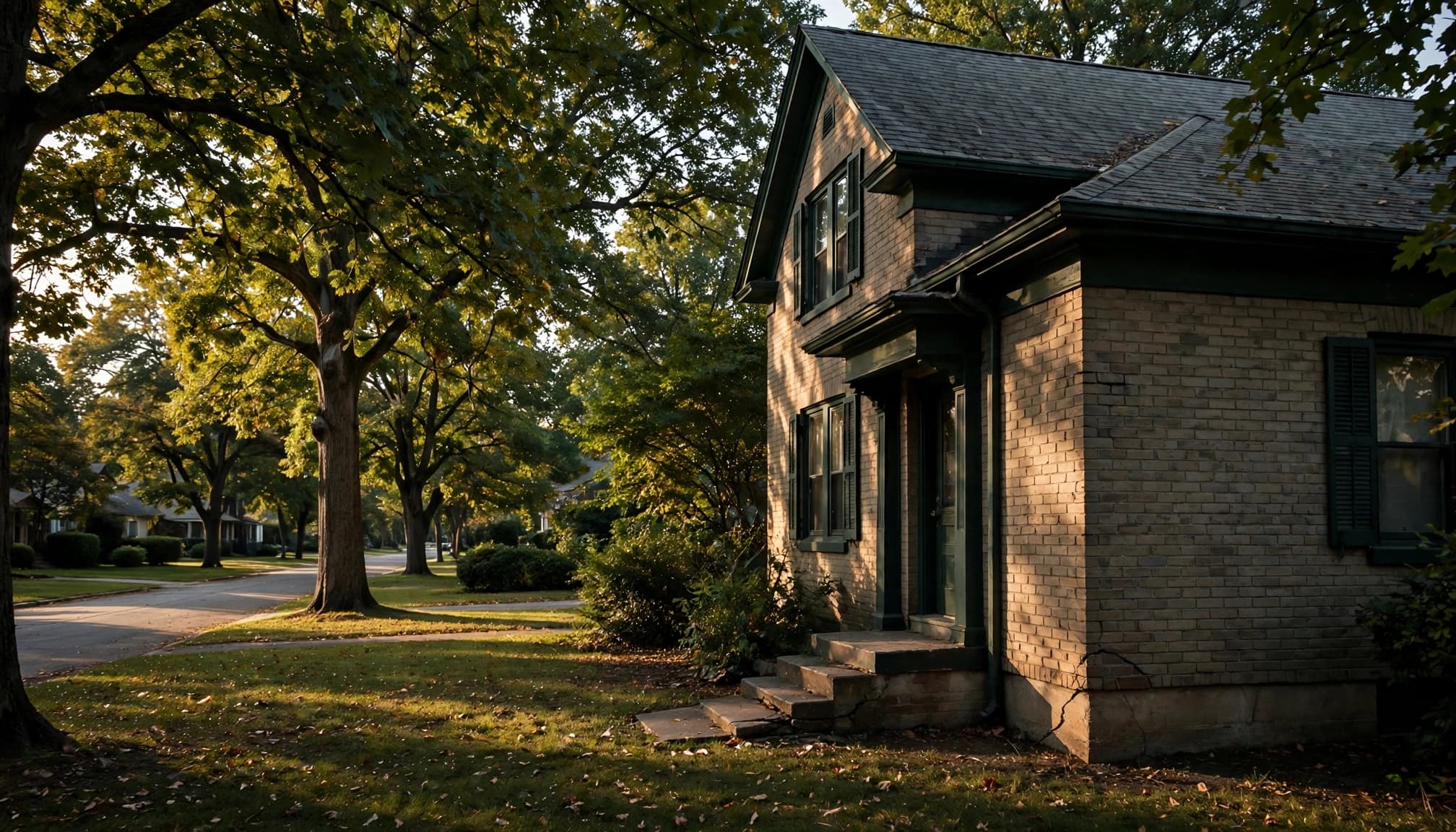
Document what you can see
Take dated photographs of cracks, gaps, water, leaning walls, and uneven surfaces. Keep repair invoices, inspection reports, engineer letters, drainage records, and insurance correspondence.
Do not cover a crack before documenting it. Do not describe a repair as complete if the underlying cause was never addressed.
Get the Problem Evaluated Before Pricing the Home
A buyer’s inspection happens after you accept an offer. It should not be your first attempt to understand the foundation.
Use an independent professional
Consider hiring an independent structural engineer or a qualified foundation professional before listing. The professional should not be selected only because a buyer or contractor recommended them.
Ask for written findings. The report should explain whether movement appears active, what additional testing may be needed, and which repairs are recommended. If monitoring is appropriate, ask what should be measured and over what period.
A contractor’s estimate can help with pricing, but it is not always a structural diagnosis. A repair company may be qualified to perform the work without being the right person to determine whether the foundation has a serious design or soil problem.
A low repair quote is not useful if it addresses a visible crack but not the reason the structure moved.
Build a complete file
Give your real estate professional a clear file before the home is marketed. Include:
- The engineer’s or foundation professional’s written report.
- Contractor proposals, warranties, and permits.
- Drainage, grading, plumbing, and waterproofing records.
- Prior inspection reports.
- Insurance claims or denied claims related to movement or water.
- Receipts for completed work.
- Your own written timeline of when you noticed the problem.
This information helps buyers price the risk. It also reduces the chance of conflicting explanations during negotiations.
Compare Repairing With Selling As-Is
There is no single correct choice for every property. The right decision depends on the severity, your available cash, the local market, and the likely buyer pool.
When repairing first may help
Repairing before listing can make sense when the problem is well-defined and the work can be completed within a reasonable budget. A completed repair, permit record, transferable warranty, and final report may give buyers more confidence.
Repair first may also help if the issue would prevent some financed buyers from obtaining a loan. Active structural problems can narrow financing options, although they do not automatically disqualify every buyer or loan program.
Get more than one written estimate. Published cost ranges differ because foundation work can involve crack sealing, drainage, reinforcement, piering, excavation, or full replacement. Broad examples range from minor work costing hundreds or a few thousand dollars to complex projects costing tens of thousands or more. A complete replacement can exceed $100,000 in some cases.
Those figures are not a quote for your home. Soil, access, structure, location, permits, and the recommended method all affect the price.
When selling as-is may be the better choice
An as-is sale can avoid the cost, delay, and risk of managing repairs. You may list with the condition clearly stated, price below comparable homes in good condition, and target buyers who can handle the work.
The tradeoff is a smaller buyer pool and more negotiation. Some buyers will ask for a credit, a price reduction, or the right to cancel after inspection. A low initial price also does not guarantee a simple closing.
| Selling path | May fit when | Main tradeoff |
|---|---|---|
| Repair before listing | The problem is defined and funds are available | You carry cost and project risk |
| List as-is | You want market exposure without managing repairs | Fewer buyers and more inspection negotiations |
| Offer a repair credit | A buyer wants control over the work | The credit may not cover the full cost |
| Cash buyer | Speed and certainty matter more than maximum exposure | The offer may be below a retail listing price |
Compare the expected net amount, not only the sale price. Include repairs, carrying costs, commissions, concessions, closing costs, and the chance that a project runs over budget.
Disclose the Foundation Problem Properly
Known foundation defects are commonly treated as material property defects. An as-is clause generally does not erase disclosure duties.
Write down what you know
Use the required seller disclosure form for your state and answer accurately. Describe what you observed, when you observed it, what professionals reported, and what work has been completed.
Do not guess at the cause. Do not state that a problem is fixed unless you have support for that statement. If you do not know whether movement is active, say that you do not know and provide the available report.
A state-by-state overview of common disclosure categories includes foundation cracks, settling, bowing walls, and other structural deficiencies. You can review what sellers may need to disclose, then confirm the rules with a licensed local professional.
Check your state’s rules
Disclosure forms, timing requirements, legal standards, and remedies vary by state and locality. Some jurisdictions require a specific form. Others rely more heavily on common-law duties or contract language.
California commonly uses a Transfer Disclosure Statement for many one-to-four-unit residential sales. Known foundation defects generally remain relevant even in an as-is transaction. California TDS guidance explains the form and delivery rules.
Texas uses its own statutory disclosure requirements, and Texas law does not automatically require a seller to repair foundation problems before selling. That does not mean a seller can hide a known issue.
Ask a licensed local real estate professional and, when needed, a real estate attorney how the rules apply to your property. General information cannot replace state-specific advice.
Negotiate a Price Reduction or Repair Credit
A buyer may prefer to control the repair rather than accept work completed by the seller. In that case, a credit or price reduction may keep the transaction moving.
There is no universal foundation repair credit. Use the independent report and written contractor estimates as the starting point. The buyer’s lender may also limit the type or amount of credit allowed.
A credit can be easier than completing work, but it does not always solve the buyer’s concern. If the foundation is an active safety issue, the buyer may still require repairs, additional inspections, or a change to the contract.
Clarify the agreement in writing. It should state the credit or price adjustment, the reason for it, whether the property remains as-is, and what happens if the buyer’s inspection finds additional damage.
Be prepared for a buyer to negotiate more than the estimated repair amount. They may account for uncertainty, temporary housing, permit delays, engineering costs, or the possibility that the initial scope is incomplete.
How to Evaluate a Cash Home Buyer
A cash buyer may appeal if you want to avoid repairs, repeated showings, or a fixed listing timeline. The process can be simpler, but simple does not mean risk-free.
Check the offer and the company
Ask for a written offer that shows the purchase price, estimated closing costs, inspection rights, closing date, and any deductions. Confirm whether the buyer is purchasing directly or plans to assign the contract to another party.
Request proof of funds. Verify the legal entity named in the contract. Ask whether the buyer can reduce the offer after inspection and under what conditions.
A direct buyer may price the home using comparable sales, expected repairs, holding costs, financing, and project risk. That can produce a lower offer than a repaired retail listing. It may still make financial sense if it avoids a major repair, months of carrying costs, commissions, and failed contract risk.
Compare certainty with market exposure
A traditional listing may reach more buyers and produce a higher gross price. It may also require repairs, showings, appraisal work, inspection negotiations, and a longer timeline.
A cash offer may reduce those steps, but you should still disclose the foundation condition fully. The buyer should not need to discover a known issue after signing.
Compare the final net proceeds and the terms. A fast closing is not valuable if the contract allows unlimited deductions or cancellation without clear limits.
A Practical Selling Checklist
Use this checklist before accepting an offer:
- Photograph and describe visible foundation signs.
- Hire an independent structural engineer or qualified foundation professional.
- Collect reports, estimates, permits, warranties, and repair records.
- Ask a licensed local real estate professional for a market comparison.
- Confirm your state’s disclosure form and deadlines.
- Decide whether repairs are affordable and likely to improve the sale.
- Price the home using comparable condition, not repaired-home prices.
- Get written terms from every cash buyer.
- Request proof of funds and identify the closing company.
- Compare net proceeds, timing, contingencies, and cancellation rights.
- Have an attorney review unusual contract language when appropriate.
Urgent safety concerns
Leave the property or restrict access if there is an immediate risk of collapse, a rapidly worsening wall, major structural separation, exposed utilities, unsafe electrical conditions, or severe flooding. Contact the appropriate emergency service, building department, insurer, or qualified professional.
Do not enter a visibly unstable crawl space, basement, or area with a leaning wall. A sale can wait. A preventable injury should not.
Foundation Problem Selling FAQs
Can I sell a house with foundation problems?
Yes. You can usually sell a home with foundation problems, but the condition affects price, financing, buyer interest, and disclosure duties. The first step is to document the problem and understand its likely scope.
Do I have to repair the foundation before selling?
Not always. State and local rules, contract terms, lender requirements, and the buyer’s situation all matter. Some sellers repair first. Others disclose the condition and sell as-is.
Can I sell without telling the buyer?
Hiding a known material defect can create serious legal and financial problems. Disclosure requirements vary, so use the required state form and obtain local legal advice when the facts are uncertain.
Is a cash buyer better than listing the property?
That depends on your priorities. A cash buyer may offer speed and fewer repair demands. A listing may provide more market exposure and a higher possible gross price. Compare the net result and contract terms.
Conclusion
Selling a home with foundation problems starts with a reliable evaluation, not a guessed repair number. Document the condition, disclose it in writing, and compare repairing, listing as-is, offering a credit, and accepting cash.
You do not need to choose the highest headline offer. Choose the option that leaves you with a clear agreement, a realistic timeline, and the best net result after repairs, costs, concessions, and risk.

