

You can sell a house with an open insurance claim. The claim itself doesn’t automatically prevent a sale, but the damage, repair work, payment terms, and buyer’s expectations need to be clear.
If you’re trying to sell a house with an open insurance claim, don’t assume the settlement will transfer to the buyer or arrive before closing. Review your policy, tell your insurer about the planned sale, keep records, and disclose known damage and claim status as local law requires.
The main task is to settle the handoff in writing. Start by finding out what your policy and claim actually require.
Key Takeaways
- An open claim doesn’t automatically stop a sale, but the policy, mortgage, contract, and local disclosure rules may affect the process.
- Tell your insurer about the planned sale and ask how it affects the claim and any outstanding work.
- Keep damage photos, estimates, invoices, adjuster reports, and insurer communications together.
- Confirm who controls claim funds, especially if the mortgage servicer or lender is named on a payment.
- Put repair responsibilities, claim proceeds, and unfinished work in the purchase agreement.
Can You Sell a House With an Open Insurance Claim?
Usually, a pending claim is a matter to resolve alongside the sale, not a reason to assume the sale cannot happen. But there’s no single rule for every policy, state, lender, or type of damage.
A roof leak, fire, burst pipe, or storm claim can affect the home’s condition and its value. A buyer may want repairs completed, a lower price, or clear written terms about what happens to an unpaid settlement. The insurer may also have requirements that affect what you can do before the claim is settled.
Before accepting an offer, tell your real estate professional that a claim is open. Ask the insurer whether the sale affects the claim, who may receive any remaining payment, and whether any work or paperwork must be completed first.
Review Your Policy and Notify the Insurer
Don’t rely on what happened with a neighbor’s claim. The policy and your insurer’s instructions control your situation.
Check the policy and claim documents
Read the sections that apply to the covered damage, repairs, payment, and any deadlines. Check whether the insurer has issued a settlement offer, requested more information, or placed conditions on payment. If the policy language is unclear, ask the insurer to explain it in writing.
The NAIC’s guidance on settling a homeowners insurance claim covers questions about how settlements are calculated and paid. Your own policy still controls the terms of your claim.
Tell the insurer you plan to sell
Contact the claim representative before you sign a contract, if practical. Explain whether repairs are complete, underway, or not started. Ask whether the insurer needs a new inspection or documents before closing, and how it will handle any payment issued after the sale.
Write down the date, the representative’s name, and the answers you receive. If instructions change, ask for an updated response in writing.
Document the Damage and Claim Status
A clear file helps you answer buyer questions and reduces disagreement over the home’s condition. It also helps you track what the insurer has reviewed and what remains open.
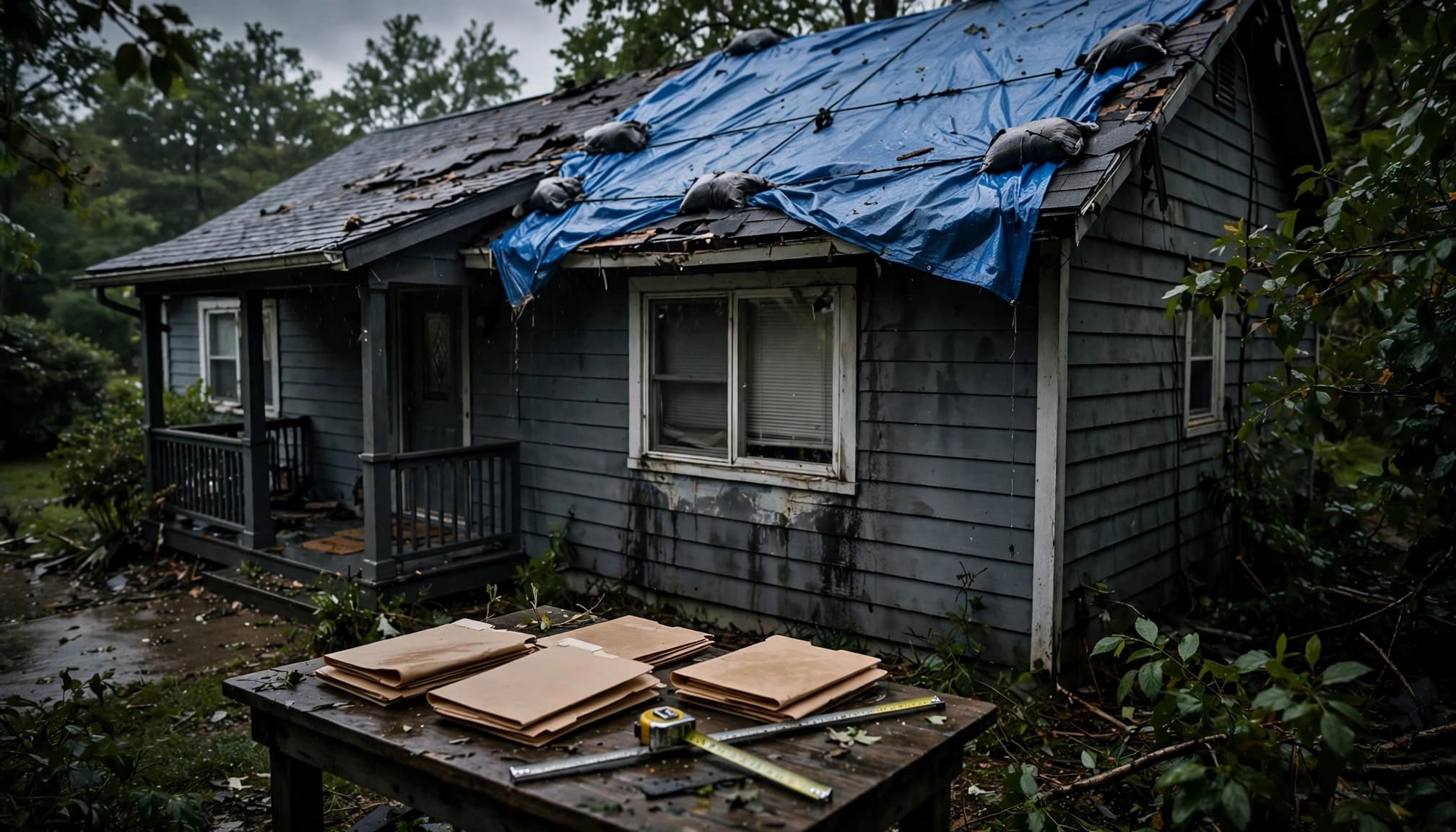
Keep one complete claim file
Save dated photos and videos, the adjuster’s estimate, contractor bids, invoices, receipts, and messages with the insurer. Include a short timeline of the damage, temporary repairs, inspections, and payments received. The NAIC describes how an adjuster’s assessment documents a loss for the insurer’s settlement decision in its overview of the claims process.
Don’t discard damaged materials or approve major work before checking whether the insurer needs to inspect them. If you must make temporary repairs to prevent further damage, record what you did and keep the receipts.
Separate confirmed facts from estimates
Tell buyers what is known, not what you hope the insurer will pay. A contractor’s estimate is not an insurer’s final settlement. An insurer’s initial payment is not necessarily the final amount.
Keep a simple summary of the claim status: what the insurer has accepted, what it has not decided, and what documentation is still outstanding. This makes it easier for your agent, buyer, and closing company to work from the same information.
Account for Repairs and Unfinished Work
The home may be sold before repairs are done, after repairs are complete, or while contractors are still working. Each option can affect the price and contract terms.
Get written estimates that describe the work and its cost. If the insurer’s estimate differs from the contractor’s, ask the claim representative how to submit the difference for review. Don’t tell a buyer that the insurer will cover an estimate unless the insurer has confirmed it.
If repairs are underway, confirm whether the contractor’s agreement can be completed or assigned after the sale. Don’t assume the buyer will take over an existing contract. The buyer may prefer to choose a contractor, negotiate a credit, or buy the property in its current condition.
An as-is sale may reduce the need to finish repairs before closing, but it doesn’t remove disclosure duties or settle the insurance claim by itself. Make sure the offer price and written terms reflect the known condition and any unfinished work.
Clarify Who Receives the Insurance Payment
The payment path matters. A settlement check may not be payable to you alone, and the sale doesn’t automatically answer who has a right to claim proceeds.
Check for the lender’s interest
The Consumer Financial Protection Bureau says a home insurance settlement check is generally made out to both the homeowner and the mortgage servicer or lender. Its explanation of how home insurance claim payments work is a useful starting point.
If your lender is named on the check, contact the mortgage servicer before closing. Ask what endorsements, inspections, repair proof, or payoff steps it requires. Don’t promise the buyer that you can hand over the settlement funds until the insurer and lender confirm how they’ll be released.
Track payments and outstanding amounts
List the amount paid, any deductible, any amount still under review, and any funds held by the lender. Check the settlement documents for conditions that affect payment, including whether a further payment depends on completed work or submitted receipts.
Keep the proceeds separate from the home-sale proceeds in your records. If money is still pending at closing, have the parties agree in writing how they’ll handle it. The contract should reflect what the insurer and lender have actually confirmed, not an assumption about what they might do.
Disclose the Damage and Set Terms With the Buyer
Disclosure requirements depend on local law and the facts. Known damage should be disclosed as required, along with the claim status where required. Ask your real estate professional or a qualified local attorney what forms and notices apply.
Make the agreement specific
The purchase agreement should state whether repairs will be completed before closing, whether the buyer accepts the home in its current condition, and who is responsible for any agreed work. If the seller will keep the claim proceeds, say so clearly. If the buyer and seller have agreed to another arrangement, describe it precisely and confirm it with the insurer and lender first.
Avoid broad promises such as “the insurance will pay for the roof.” State only what has been approved and what the contract requires. If there are open estimates, disputed damage, or unpaid invoices, list them and say who will address each item.

Expect buyer terms to vary
A buyer who plans to occupy the home may ask for repairs or a credit. An investor may consider buying it as-is but account for repair costs and risk in the offer. Neither approach guarantees a higher net amount.
Compare the full costs, not only the offer price. Include repairs, carrying costs, commissions if listing, and any closing conditions that affect timing. A direct buyer may offer a way to sell without completing repairs or holding showings, but the written offer should still explain the price and any claim-related terms.
Prepare the Closing File
Before closing, give the title or escrow company the purchase agreement, mortgage payoff information, claim correspondence, repair invoices, and settlement documents that affect the transaction. Ask what it needs to confirm the seller’s and lender’s interests in any claim payment.
Tell the closing company if a check is outstanding or a claim decision is pending. The title company handles the closing documents and funds according to the transaction instructions. It doesn’t decide what an insurance policy covers or whether the insurer must pay.
Keep copies of the signed agreement and closing statement. Save your claim records after the sale, including any documents sent to the insurer or lender. If the insurer contacts you after closing, respond based on the agreement and seek advice if responsibility is unclear.
Consider Tax Questions Separately
Insurance proceeds and casualty losses can affect tax reporting, but the result depends on the facts. The IRS says an insured loss generally isn’t deductible as a loss covered by insurance, and reimbursement reduces the loss amount. Review IRS Topic No. 515 and ask a qualified tax professional how the sale, settlement, and any repairs apply to you.
Don’t use another homeowner’s tax outcome as a prediction. The amounts, timing, property use, and prior tax treatment can change the analysis. Keep settlement statements and repair records for your tax professional.
Frequently Asked Questions
Does an open insurance claim stop a home sale?
An open claim doesn’t automatically prevent a sale. The policy, lender’s interest, contract terms, and local disclosure rules may affect what needs to happen before closing.
Can the buyer take over my insurance claim?
Don’t assume the buyer can take over the claim or receive its proceeds. Ask the insurer and lender how they’ll handle the claim after a sale, then put the parties’ agreement in writing.
Should I finish repairs before listing?
Not in every case. Compare the repair cost and likely effect on the sale against selling in the home’s current condition. Check with the insurer before doing work that may affect an inspection or payment.
What if my lender is listed on the settlement check?
Contact the mortgage servicer and ask what it requires to endorse or release the funds. The payment may not be available for your use until the lender’s requirements are met.
Keep the Sale and Claim on Separate Tracks
An open claim doesn’t automatically close the door on selling your home. It does mean you need clear records, written answers from the insurer and lender, and sale terms that match the facts.
Before you sign, review the policy and disclosures with your insurer and real estate professional. Ask a qualified attorney or tax professional for advice where local rules, contract terms, or tax treatment are uncertain.


2 thoughts on “How to Sell a House With an Open Insurance Claim”