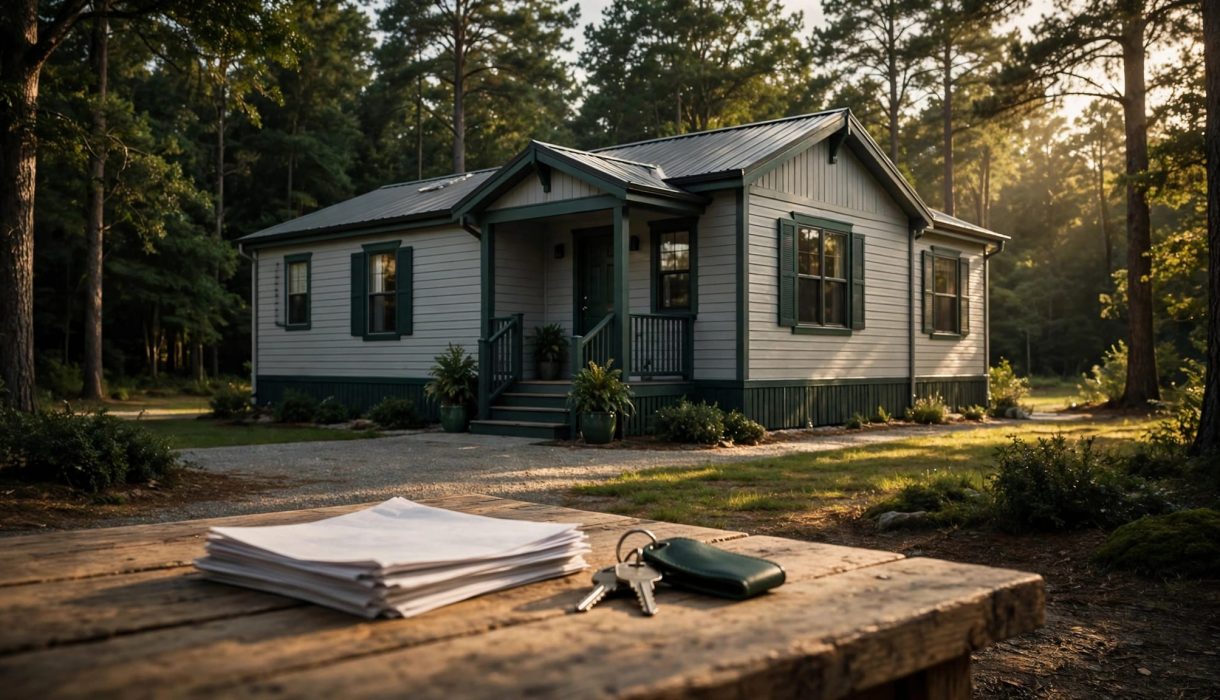

Selling the home and the land together can involve more paperwork than a standard house sale. A manufactured home on owned land may still be titled as personal property, even when it sits on a permanent foundation.
The first job is to confirm how your state classifies the home and what documents transfer it. Once that’s clear, you can set a price, choose a sale route, and plan the closing without guessing which paperwork applies.
Key Takeaways
- State law, title status, installation, and legal affixation can all affect whether the home is real property or personal property.
- Check the deed, home title, recorded documents, and liens before setting a closing date.
- Compare the property with similar manufactured homes and land. A general house estimate may not account for the home’s legal status or condition.
- Disclosures, taxes, financing, and transfer steps vary by location. Confirm local requirements with the right professionals.
Determine How the Home Is Classified

Check whether it is real property or personal property
Owning the land does not automatically make the home real property. A state may treat it as personal property unless specific title and recording steps have been completed. Installation matters, but physical attachment alone may not settle the question.
Look at the home’s current title, county records, and any documents filed when it was installed. If the title was surrendered or the home was legally affixed to the land, the records should show how that was handled. Fannie Mae’s legal guidance for manufactured housing explains that the home must be legally classified as real property under applicable state law for certain mortgage transactions.
Ask what your state requires
Contact the local title company, county recorder, or agency that handles manufactured-home titles. Ask whether the home and land are recorded as one property and what needs to happen before transfer.
Procedures differ. Missouri, for example, has state forms for manufactured-home affixation or severance and a filing deadline for certain documents. That process does not apply nationwide. Get instructions for the state and county where your property is located before promising a buyer a closing date.
Check Deeds, Titles, and Liens
Match the ownership records
Gather the land deed, manufactured-home title or certificate, tax records, and any documents related to affixation. Check that names, ownership shares, and property details are consistent. If a former owner, spouse, trust, or estate appears in the records, ask the title company what is needed to clear the mismatch.
Also check whether there are co-owners who must sign. A buyer cannot receive clear ownership if a required owner has not agreed to the transfer.

Find every lien and confirm the payoff
A mortgage may cover the land, the home, or both. There may also be a separate lien recorded against the home’s title. Ask each lender for a current payoff statement and confirm how its lien will be released at closing.
Don’t assume that paying off a land mortgage clears a lien attached to a separate home title. Fannie Mae’s information on manufactured-home titling describes how title procedures vary by state. A local title professional can check the records and identify the documents needed to transfer both parts of the property.
Prepare the Property and Set a Defensible Price
Get the home and land ready to show
A buyer needs a clear picture of what’s included and what condition it’s in. Remove loose debris, make the home accessible, and take clear photos of the exterior, interior, outbuildings, driveway, and surrounding land.
Gather records for repairs, permits, additions, and major systems such as heating, plumbing, septic, or well equipment. You don’t need to complete every possible repair before selling. You do need to describe known problems accurately and avoid implying that unverified work was permitted or inspected.
Compare like with like
Price the home and land as one package, using recent sales of similar manufactured homes with comparable land, size, age, condition, and location. A nearby site-built house may not be a useful comparison. Neither is a manufactured home in a park if your buyer is purchasing land with the home.
An appraisal from someone familiar with manufactured homes can help when comparable sales are hard to find or when a lender requires an appraisal. The county’s assessed value is useful for tax purposes, but it doesn’t establish what a buyer will pay. Keep your price support in writing so you can explain the number to buyers and respond to questions.
Decide How to Market and Sell
A traditional listing puts the property on the open market
A real-estate agent can help price the package, prepare marketing, schedule showings, and manage offers. Ask whether the agent has sold manufactured homes on owned land and understands the title process in your area.
Compare the likely sale proceeds, not only the proposed list price. Include commissions, repairs, carrying costs, and any closing costs you’ll pay. A listing can bring more buyers into the process, but it can also mean showings, negotiation, and waiting for a buyer’s financing and appraisal.
A direct sale may suit a different timeline
A direct buyer may offer a simpler route when you want to avoid repairs or repeated showings. The offer can be lower than the amount a successful open-market sale might bring. Compare the written offer with a realistic estimate of net proceeds from listing.
Bud Holdings operates in 38 states and says its cash offers account for comparable sales, repairs, carrying costs, and project risk. Ask for the offer and its calculation in writing. Confirm who handles closing, what fees apply, and whether the proposed date works for you. You don’t need to accept an offer until you understand the terms.
Confirm Appraisal and Financing Fit
Ask the buyer’s lender about the property status
A buyer may need a mortgage, and the lender will decide what property classification and documents its loan requires. Some mortgage programs require the home to be legally classified as real property. The process can depend on state title rules and how the home is installed.
Before accepting a financed offer, ask the buyer to confirm with the lender that the loan can cover both the home and land as they are currently titled. Fannie Mae’s factory-built housing eligibility guidance sets out requirements for loans eligible for sale to Fannie Mae. Those requirements are not a universal checklist for every buyer or every lender.
Understand what the appraisal will address
A manufactured-home appraisal may need to consider the home, the land, the condition, and comparable sales. The appraiser and lender determine the method and documentation they require. Ask early whether the current title status could affect the loan or appraisal.
If the appraisal comes in below the agreed price, the buyer may need to bring more cash, renegotiate, or use a different financing plan. The contract should state what happens if financing or appraisal conditions are not met. Don’t treat a mortgage preapproval as final approval for this specific property.
Handle Disclosures, Taxes, and Closing Together
Confirm local disclosure and tax rules
Disclosure requirements differ by state and sometimes by city or county. Ask a local real-estate professional or attorney which forms apply. Provide accurate information about known defects, repairs, additions, and other required disclosures. Keep copies of what you give the buyer.
Ask a tax professional or local tax office how the sale may affect property taxes and your tax reporting. Classification can affect how the home appears in tax records, but the result depends on local rules and your circumstances. Don’t rely on last year’s tax bill as a complete estimate of closing costs or taxes due at sale.
Coordinate one transfer for the home and land
Before closing, confirm which documents transfer the land and which documents transfer the home. Depending on state law and the home’s status, the transfer may involve a deed, a title document, or filings with more than one office. The title or escrow company can explain what it will prepare and what you must sign.
Have the closing professional confirm that required lien payoffs, releases, signatures, and state filings are covered. Review the settlement statement before signing. If instructions or figures differ from what you expected, stop and ask for an explanation before funds are sent or documents are recorded.
FAQ: Selling a Manufactured Home on Owned Land
Does owning the land make the home real property?
No. Land ownership is one part of the question. State law, title status, installation, and legal affixation also matter. Check the records and state procedure rather than relying on the home’s foundation alone.
Do I sell the home and land in one transaction?
Often they’re sold together, but the documents may still treat them separately. Your title company can confirm whether the home’s title needs a separate transfer or whether it has been legally combined with the land for the sale.
Can a buyer get a mortgage?
Possibly. The lender must review the property’s classification, title, appraisal, and other loan requirements. Ask the buyer to confirm the home-and-land package is eligible before you rely on a financing contingency or closing date.
Do I have to pay off liens before listing?
You can usually list while a loan is outstanding, but liens must be addressed as part of the sale. Get payoff information early and confirm with the title company how each lien will be paid and released at closing.
Conclusion
The sale starts with the records, not the listing photos. Confirm how the home is classified, identify liens, and find out how your state transfers the home and land.
Then set a price based on comparable properties, compare sale routes by net proceeds, and keep the buyer, lender, and closing professional aligned. Local rules govern the paperwork, so confirm them before you commit to a closing date.


