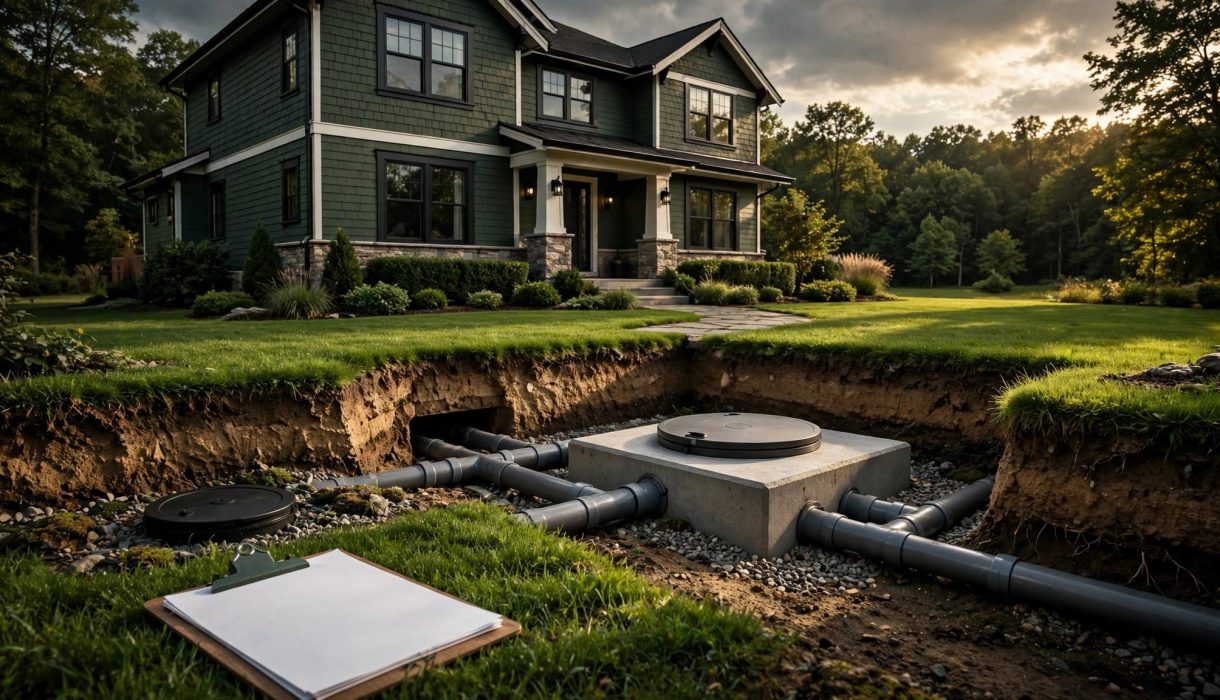

Selling a home with a septic system adds a few tasks, but they’re manageable when you handle them in order. The process of selling a home with a septic system starts with local requirements, because inspection and transfer rules aren’t the same everywhere.
Gather the records, check with your local health department, and book an inspection early. That gives you time to respond to findings and agree with the buyer on any work before closing.
Key Takeaways
- Check local rules before listing. A septic inspection, permit, disclosure, or transfer filing may be required.
- Find the system records and site plan before scheduling an inspection.
- Don’t assume the tank needs pumping. Follow the inspector’s recommendation and local requirements.
- Share known problems and inspection results with the buyer. Put any repair agreement in writing.
- Give the buyer the available maintenance history, system plan, and service contacts before ownership changes.
Selling House Septic System Requirements Start Locally
Septic requirements are set by state and local authorities. The U.S. Environmental Protection Agency says many states require an inspection when real estate changes hands, but that isn’t a nationwide rule. Start with the county or city health department that oversees onsite wastewater systems.
Ask whether the sale requires an inspection, a specific report, a permit review, a disclosure form, or a filing after closing. Also confirm who may perform the inspection and whether there are deadlines. A requirement in one county might not apply to a property in the next county.
Confirm what the sale requires
Tell the health department you’re preparing to sell and provide the property address. Ask about the system type, inspection scope, required qualifications, forms, and timing. If you’re working with a real estate agent, attorney, or title company, ask them to confirm the transaction requirements too.
The EPA’s septic-system transfer guidance is a useful starting point, but it doesn’t replace local instructions. Check the rules that apply to your address.
Check whether a permit or record is missing
A health department may have a septic permit or an approved site plan on file. Ask how to obtain copies and what to do if the records are missing. A missing plan can slow down an inspection or make it harder to identify where the tank and drain field are located.
Gather Septic Records Before Booking an Inspection
Good records help the inspector understand the system and help the buyer plan for care after closing. Look through your closing papers, home files, and invoices from septic contractors. If you can’t find a record, ask the local health department or the company that last serviced the system.
Collect the documents you already have
Set aside the installation or repair permit, septic plan or as-built drawing, past inspection reports, pumping receipts, and repair invoices. Include any paperwork about alarms, pumps, filters, or other components. Don’t fill gaps with guesses. If you don’t know when the tank was last pumped, say so.
The site plan is especially useful. It can show the tank and drain field, along with any reserve area. Keep the original document if you have it, and make a copy to share.
Write down what you know
Make a short list of service dates, repairs, recurring alarms, backups, odors, or wet areas in the yard. Include dates where you know them. If a contractor gave you verbal advice, note who you spoke with and when, but don’t present that as a written inspection report.
Records don’t prove the system is currently working. They give the inspector and buyer a clearer history to review.
Arrange the Septic Inspection
Book the inspection early enough to leave time for follow-up. Ask the health department which inspection type is required and whether the report must use a local form. The EPA’s property transfer inspection guidance explains why transfer inspections may differ from routine maintenance checks.

Confirm the scope and access
Before hiring an inspector, ask what the inspection includes. It may cover accessible system parts, the tank, pumps or alarms, signs of leakage, and the drain field. The exact scope depends on local rules and the system.
Make sure the inspector can reach the tank and other components. If you don’t know where they are, share the site plan or ask the health department how to locate records. Don’t dig or open system components yourself unless a qualified professional instructs you.
Ask before arranging a pump-out
Pumping is not automatically required for every sale. Some inspectors may recommend it to examine the tank, and some local requirements may specify when it must happen. Ask the inspector whether pumping is part of the inspection or a separate step, and request a receipt if service is performed.
A routine inspection is also not the same as a guarantee of future performance. The EPA’s homeowner guidance recommends regular inspections, commonly every one to three years, with timing depending on the system and use.
Review the Report and Decide What Needs Attention
Read the full report before sending it to the buyer. If a finding is unclear, ask the inspector to explain what was observed, what needs further testing, and whether the issue affects the system’s operation. Keep the written report and any follow-up estimates together.
Separate observations from repair recommendations
A report may describe a condition, recommend more testing, or call for repair. Those are different things. Ask the inspector to identify which items are confirmed problems and which need more information.
If the report identifies a malfunction, get a written diagnosis from a qualified septic professional. The EPA’s guidance on septic malfunctions covers common signs and repair considerations. Don’t describe a system as “certified” or problem-free unless the report actually says that.
Get costs and approvals in writing
If repair is recommended, ask for a written scope and estimate. Check whether the work needs a permit or approval from the local health department before it begins. A contractor’s estimate is not a permit, and repairs shouldn’t start until you know what approvals apply.
Keep invoices, permits, and any post-repair inspection results. The buyer will need to know what was completed and what remains open.
Disclose What You Know
Complete the seller disclosure forms required for your transaction and answer the septic questions accurately. State and local disclosure rules vary, so ask your real estate professional or attorney which forms apply. Share relevant inspection reports, service records, and written repair estimates with the buyer.
Disclose known backups, alarms, odors, wet spots, slow drains, or prior repairs. If you don’t know whether a problem is fixed, say what happened and provide the records you have. Don’t convert uncertainty into a claim that the system works properly.
Give the buyer the report early enough for review. The purchase agreement may set deadlines for inspections, responses, and repair negotiations. Keep those dates in view and use written communication when either party agrees to a change.
Agree on Repairs or Other Sale Terms
The inspection report doesn’t decide by itself who pays for work. The purchase agreement and local rules matter. Depending on the report and requirements, the parties may agree that the seller completes approved repairs, the buyer accepts responsibility, or the transaction terms change.
Some jurisdictions require a failed system to be repaired before a sale. Others may allow a transfer under specific conditions. Don’t assume a buyer can take over required work just because both parties agree. Confirm any proposed arrangement with the health department and transaction professionals.
If you’re selling as-is, be clear about what that means in your agreement. It doesn’t remove disclosure duties or override a local inspection or repair requirement. Put any agreement about repairs, credits, access, or responsibility in writing before closing.
Transfer the Records and Maintenance Details
The buyer needs more than a closing date. Provide the materials that explain what system is on the property, where its parts are, and what service has been done. Keep a copy of everything you hand over.
Prepare a simple handoff packet
Include the inspection report, permit and site plan, repair records, pumping receipts, maintenance instructions, and any relevant health department forms. Add the names of contractors who serviced the system, if you have them. Identify unresolved recommendations so the buyer can follow up.
Don’t claim that records are complete if they aren’t. If an as-built drawing or permit is missing, tell the buyer and explain what steps you took to look for it.

Check whether a transfer filing is required
Some places require a notice, inspection report, or other septic paperwork to be filed as part of the transfer. Ask the health department who files it, which form is needed, and the deadline. The buyer may have duties after purchase, but confirm who is responsible before closing.
Give the buyer the packet before or at closing, based on local rules and the purchase agreement. Confirm receipt in writing if the contract or transaction professionals ask for it.
Keep the Closing Steps in Order
Septic work can affect the transaction timeline. Set the inspection date soon after you confirm the requirements, and share the report with the buyer within the time allowed by the contract. If more testing or repairs are needed, ask about permit review and contractor availability before agreeing to a closing date.
Before closing, confirm that required reports and disclosures have been delivered, agreed repairs are documented, and permit or transfer filings are complete or assigned to the correct party. Ask the title company or closing professional whether any septic documents must be included in the closing file.
If a local office has not confirmed a requirement, contact it directly. A real estate professional can help manage the transaction, but the health department is the source for its local septic rules.
Frequently Asked Questions
Is a septic inspection required to sell a house?
Sometimes. The EPA says many states require one during a real estate transfer, but requirements depend on the state and locality. Ask your local health department whether your property needs an inspection or a specific report.
Does the septic tank always need to be pumped?
No. Pumping depends on the inspection, system condition, and local rules. Ask the inspector whether pumping is needed and keep the service receipt if it is done.
Can I sell a house with a failed septic system?
That depends on local law and the contract. Some places require repairs before transfer; others may allow a specific arrangement. Confirm the rule with the health department before agreeing that the buyer will handle repairs.
What should I give the buyer?
Provide the reports, permits, site plan, maintenance and repair records, and required transfer paperwork you have. Explain any missing documents or unresolved findings. The buyer should know what the records show and what they don’t.
Make the Handoff Clear
Selling a home with a septic system works best when records, inspection results, and local requirements are handled before closing week. Confirm the rules for the property, share what you know, and document any agreement about repairs or responsibility.
The inspection is one step. A clear handoff gives the buyer the information needed to maintain the system after the sale.


